Sensra
Overview
Navigating cities can be overwhelming for disabled users and people with disabilities, who face a range of physical and sensory challenges that limit safe, independent mobility. Everyday obstacles create serious barriers to accessibility, leading to social exclusion and reduced participation in daily activities.
Sensra is an accessibility-focused navigation app designed to empower individuals to move confidently through urban spaces, regaining autonomy and fostering inclusion.
Understanding the Challenge
Beyond physical barriers, sensory overload is a major concern for neurodiverse users. Urban environments are saturated with intense stimuli - loud sounds, flashing lights, dense crowds, and chaotic visual cues - that challenge the accessibility and usability of public spaces.
Unfortunately, most navigation apps fall short in providing accessible services. They typically lack real-time updates, offer outdated or incomplete accessibility information, and ignore the diverse sensory needs of users with disabilities.
Design Solution
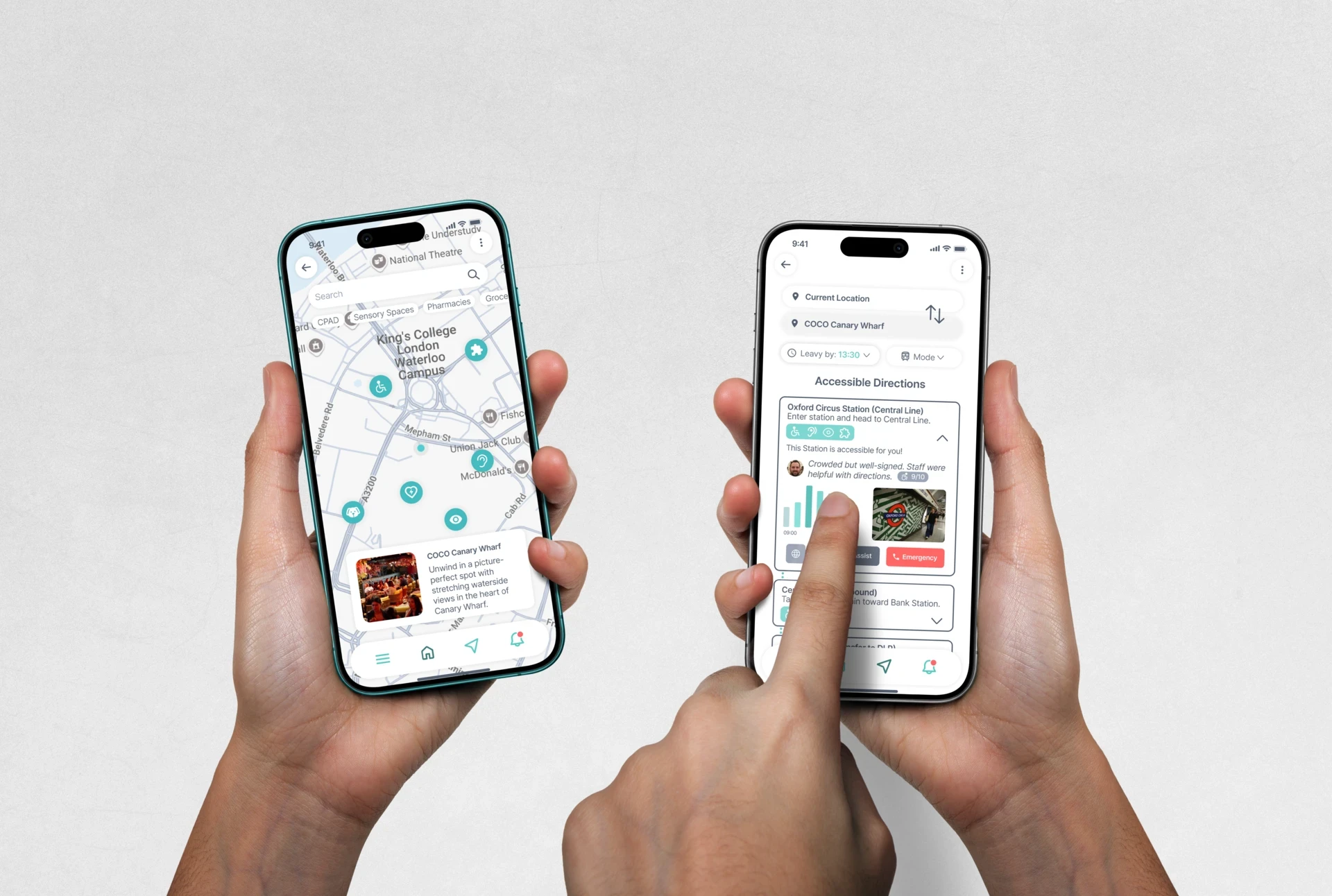
Sensra bridges these critical gaps by delivering personalized, real-time navigation through its mobile application available on iOS and Android. It considers both physical and sensory accessibility, providing accurate data and information via a comprehensive web-based network.
With a user-centric design, Sensra empowers individuals to move confidently through urban spaces, enhancing their journey and mobility, reducing anxiety, and fostering inclusion in the community.
Key Features
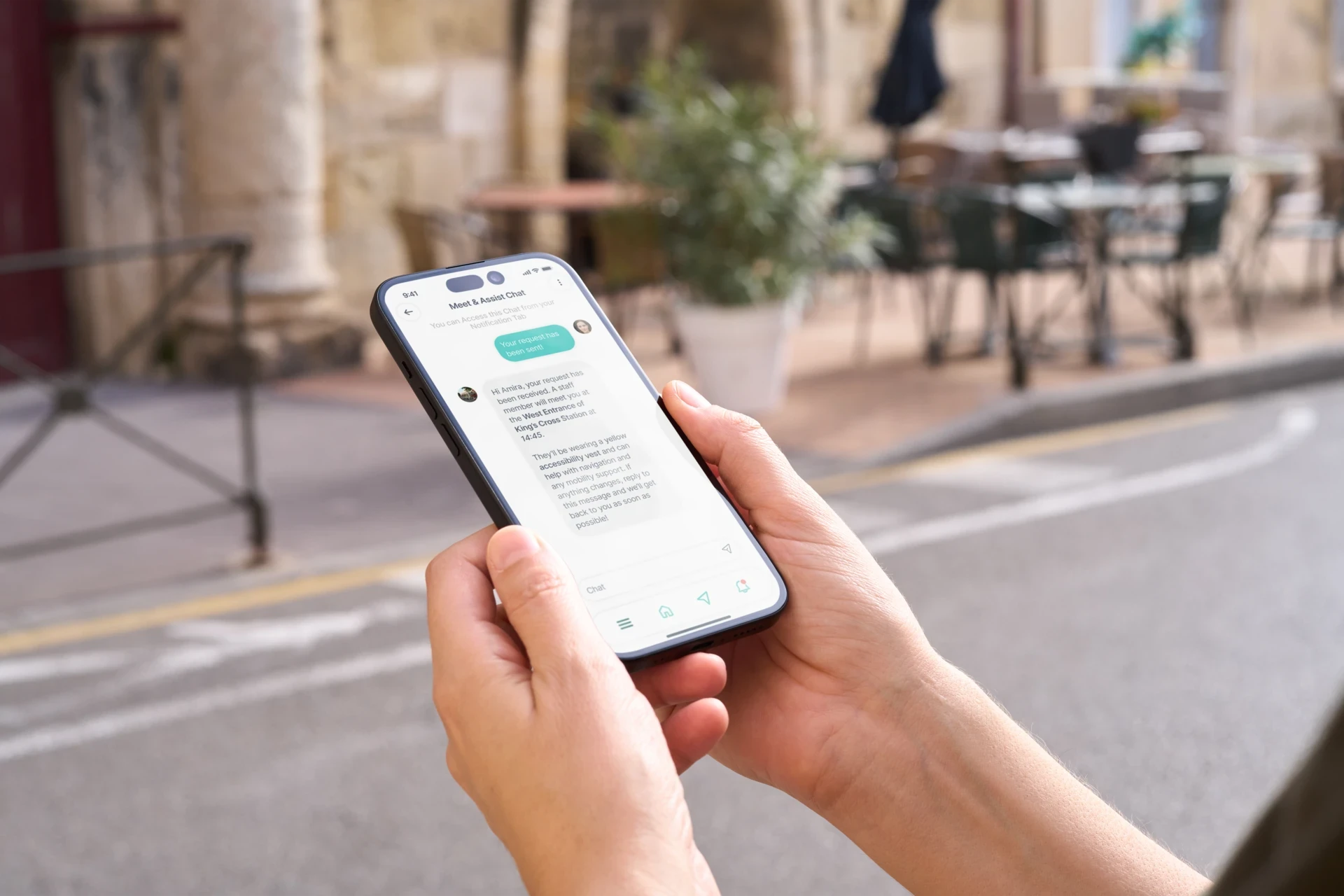
Sensra features "Meet & Assist," enabling users to arrange support at participating venues or stations, connecting them with staff trained to assist with specific accessibility needs through live chat or scheduled help services.
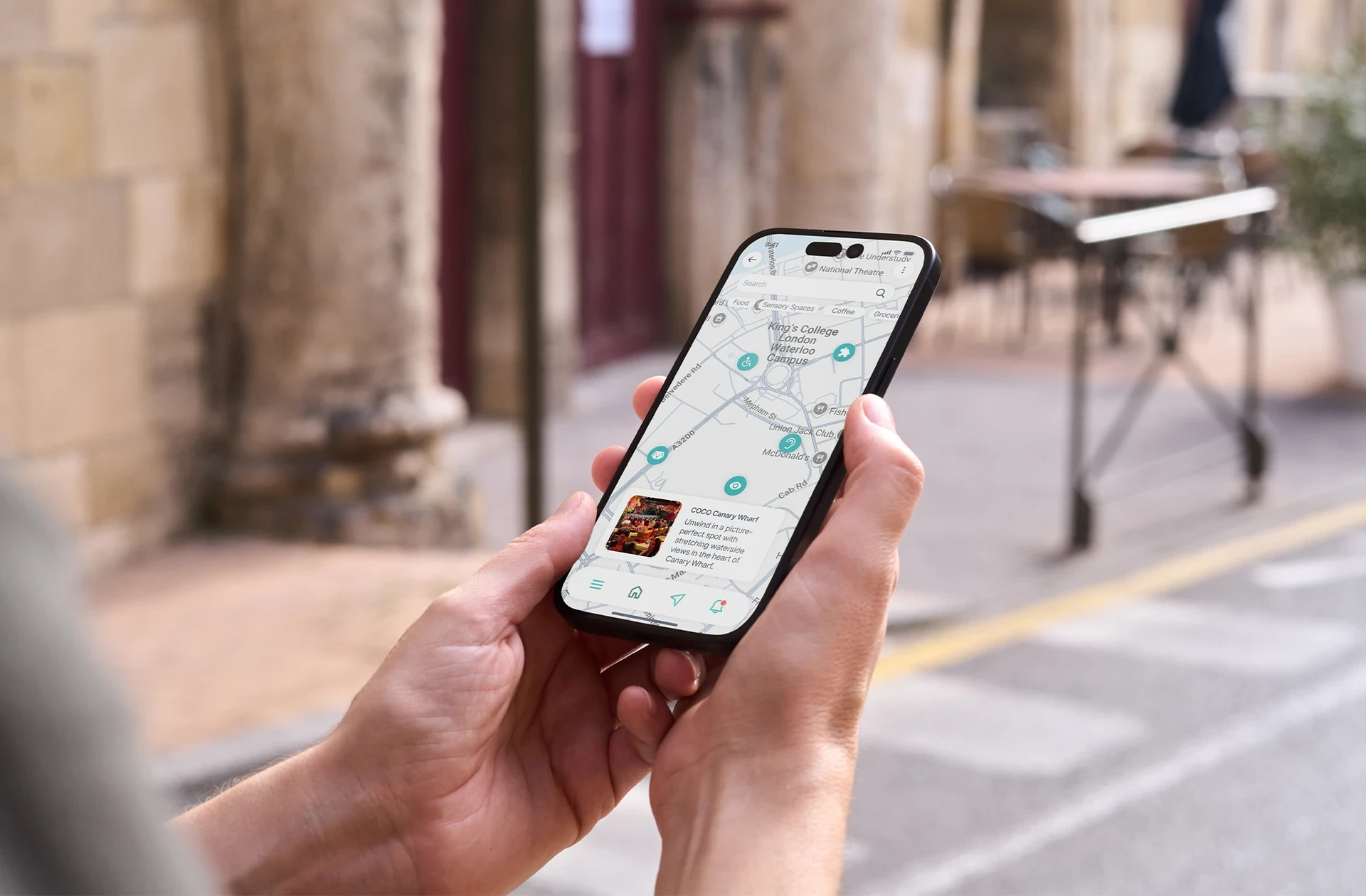
To enhance safety and ensure accurate navigation indoors, Sensra incorporates detailed point-of-interest markers and intersection insights for large venues like campuses, medical centers, and shopping malls. This builds independence for users in environments where traditional navigation systems often fall short.
Impact
The design prioritizes calming visual cues and accessible interface patterns that help reduce anxiety during travel in chaotic or overstimulating environments. Route options and alerts are tailored to user preferences - for example, avoiding crowded or noisy areas.
Through thoughtful design and strategic communication, Sensra transforms how disabled and neurodiverse users experience urban navigation, making public spaces more inclusive and accessible for all.